
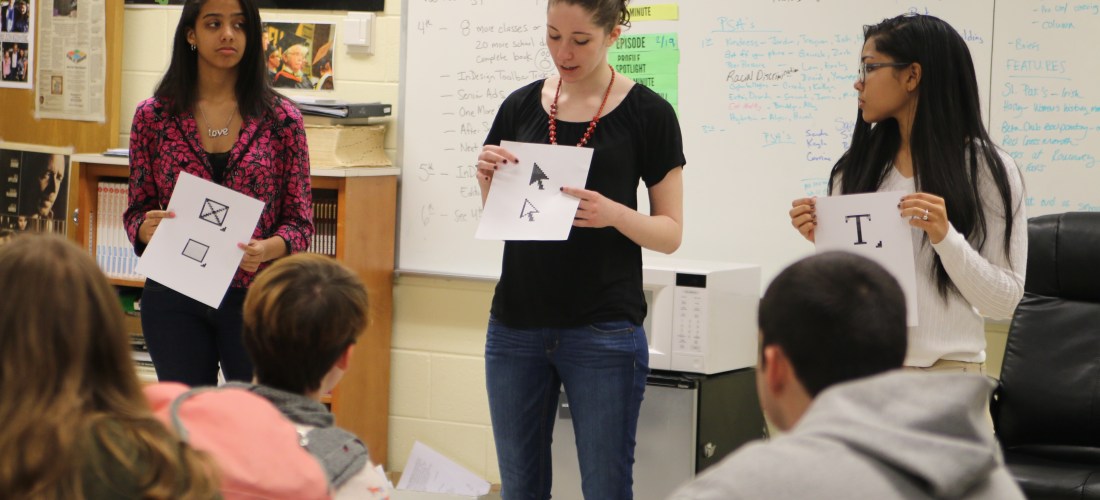
Desks – nope. Rows – nope. One dry-erase board with only the teacher’s handwriting on it – nope and nope.
Does this sound familiar? If it does, then you are probably a journalism teacher. If it makes you nervous just thinking about thirty students not quietly sitting in rows, taking notes down from the PowerPoint, then you are probably not a journalism teacher.
I have to admit, almost every day that I step into my classroom, I get the old sensation of my coaching days when I wasn’t sure what team was going to come out of the locker room. The most satisfying days in the gym were when I showed up and my captains led warm-ups, everything had been set up for the practice or game, and I was there to simply monitor and adjust. Those teams had won before the first play had been made.
And this is how we should think about not only the media classroom, but all classrooms.
The media classroom serves many purposes. Of course one of the most important functions of that classroom is to provide a safe environment for students to learn how to write, interview, edit, and produce a product. Along the way the lessons that will be learned will be far reaching. There will even be those lessons learned to which students are somewhat oblivious. Here are some lessons that your classroom setup will teach your journalism students.
Lesson One: Listening takes a lot of work.
In our opening lessons on interviewing, I have my students do a number of things. The skill of interviewing involves much more than just jotting down a few facts. The lesson involves three students working together. One student asks the questions. One student responds to the questions. And one student records the audio of the interview and observes the interaction. Each role is essential in this activity.
The observer at the end of the experience shares what they saw with the entire class. Did the reporter give signals that they were listening? Did the reporter show signs of empathy through non-verbal communication? Did the reporter allow for there to be quiet time, or did the reporter interrupt out of being nervous?
In addition, the entire class listens to the interview and discusses the ebb and flow of the conversation. We discuss how it may have gone differently if this was said or that was asked.
The lessons they teach one another during these first weeks have such a huge impact on the way they interact as reporters on the job, and just as importantly as a staff when an editor is helping a writer. They cannot do this sitting in a row of desks. This activity and many other newsroom activities depend on an environment where students face one another. They need an environment where they can work together at one table.
So therefore there are no desks. And there are no rows.
Journalism students will spend more time working with each other than they will listening to me spout off about quote attribution. The work environment must reflect this need. There will be days when you think I wish they would all just get into rows and not make a peep. But this is not journalism. Will there be moments where they want to socialize? Yes. But that is when the coach in you calls a timeout, asks the captains to come over to the bench, and you tell them how they need to get the team refocused.
Lesson Two: I am not the only teacher in the room.
From the moment we first begin story idea brainstorming to the final page exported and sent to our local printer, students take the reins over every day. If there is not an opportunity for this, then make sure you make one. A publication’s room must be student-centered in project-based learning. The focus is on their passions in developing the learning experience.
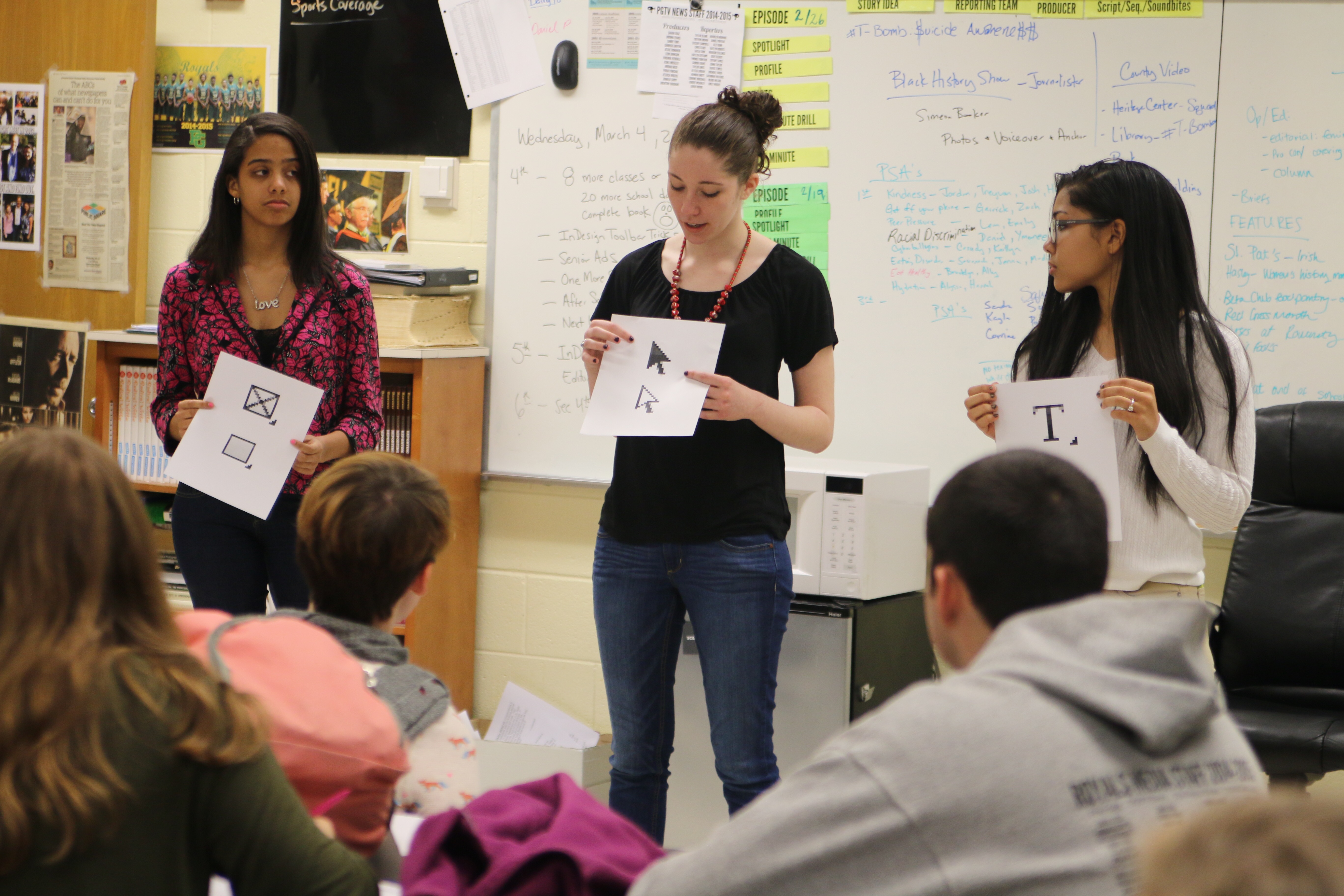
There are four speaking spots in our newsroom, and every time an editor speaks, they speak from their place of power. The online editor goes over the daily assignments in front of his/her deadline board. The newspaper EIC does the run down in front of his/her assignment board. The broadcast director does a check in front of his/her show board. The photo editors speak about assignments in front of the equipment lockers and calendars.
At the beginning of the school year or over the summer, take time to ask your staff what will work best for them. Combine those ideas with your expertise judgment and create a space that is conducive to collaborative work.
Every editor feels like they own the space they manage. If they feel like you are making the decisions and own the classroom, they will never completely take ownership of the publication. If they never take ownership of the publication, there will be times when apathy will run rampant in your newsroom.
Every classroom in our building where there are rows of desks, the students feel like they are just temporarily leasing that space. The students are there for 80 minutes to find out how to get a passing test score, and they will be on their way. In our newsroom, they come in early and stay late, because it is their home. Teachers should ask themselves: Would a student come in on his/her own to work if they didn’t have to? The answer to that question in the publication room is always a resounding yes.
Lesson Three: Assessment is different for project-based learning and student-centered learning.
Most of us have a recollection of a teacher passing back papers and wondering who among the class received the highest grade. I still remember a math teacher who would always praise this one particular student (we’ll call her Elizabeth) and the rest of us would resent her for busting the curve.
Obviously the goal in a classroom where testing is at the center is that the student should want to beat out the rest of his/her classmates. It is the age-old cliché of moving to the head of the class. And in some classrooms the presence of rows in fact invites such a mentality.
In a publication’s workroom there is only one goal for the staff and that is for all students to receive a 100/A on their final assignment. In my math class I would have never felt sad or responsible if Elizabeth missed a math problem on the test. In fact it probably meant I would be getting more of a curve. But on a newspaper staff, if Elizabeth misspells a word in the headline, not only do I feel bad for her, but I also feel responsible for not helping proof that page more. Not only did Elizabeth experience failure, but so did I and the rest of the team.
While each individual may be assessed for his or her knowledge and ability to complete a deadline, ultimately everyone is assessed when the public reads the paper or yearbook.
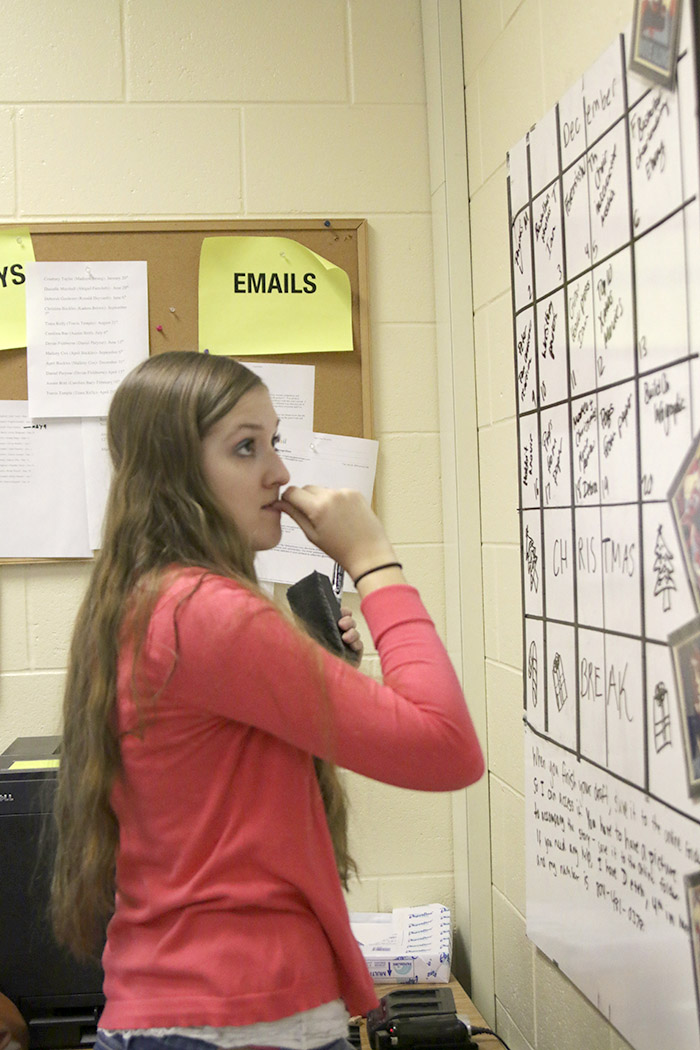
So my last bit of advice for your classroom, is to put on display your assessment. Enter contests, and hang your awards on the walls. Hold onto emails addressed to your staff about what a great job they did, and put them up on a bulletin board. If you have a bad issue talk about what needs to be done as a staff, and hang up a poster with three mistakes you’ll never see in another issue. Make your assessment known good or bad, so that they will work together to accomplish even greater heights.
No, your classroom does not look like the other rooms in your building. But eventually other teachers will find the strength to join you, and make the classroom much more than four walls and four rows.
 Media Advice